
Certificate Course in Methods and Applications in Social Science Research (CCMASSR)
Two Weeks Certificate Course in Methods and Applications in Social Science Research (CCMASSR)
Organised by Institute for Social and Economic Change (ISEC),
Dr. V.K.R.V. Rao Road, Nagarabhavi, Bengaluru – 560072, India.
ABOUT ISEC
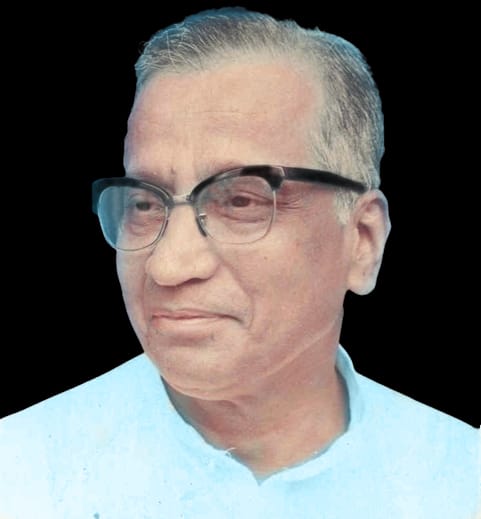
The Institute for Social and Economic Change (ISEC) is an All-India Institute for Interdisciplinary Research and Training in the Social Sciences, established in 1972 by the late Professor V K R V Rao. It is registered as a Society under the Karnataka Societies Registration Act, 1960, to create a blend of field-oriented empirical research and advances in social science theories leading to better public policy formulation. For more information, please visit ISEC Website https://www.isec.ac.in/
ABOUT THE COURSE
Research is an integral part of the growth and expansion of social sciences. Its importance is enhanced much more in the modern, globalized society where development has attained additional dimensions. Social Science Research faces the challenge to thoroughly equip itself to meet the ever-growing needs of the society that is transforming at a rapid pace. Often, demarcations (into rural, urban etc) are blurred by the advancement in technology and changing socio-economic scenario. Societal problems are assuming wide-ranging complexities. Under these circumstances, it is necessary to approach research from a preliminary and systematic understanding of the methods in social science research. It is an essential part of social science research and over a period of time, the methods have expanded enormously in their scope and application.
The Course in Methods and Applications in Social Science Research offered at ISEC is outlined with an inter-disciplinary approach. It attempts to combine the on-going theoretical and conceptual debates and paradigms in various disciplines that contribute towards an understanding of issues relating to research methods in the context of development of the various methods adopted in social sciences. Over a period of time, the methods have also expanded enormously in their scope and application. The present course attempts to combine the on-going theoretical and conceptual debates and paradigms in various disciplines that contribute towards an understanding of issues relating to research methods in the context of development.
TARGETED PARTICIPANTS
This course is expected to be useful to researchers, trainers, administrators, policy makers and others affiliated with:
-
Academic and higher educational institutions engaged in social science research.
-
PG and Ph.D. scholars in social sciences
-
Government and public administration
-
Civil society organisations
-
Corporate sector and consultancy firms
-
Banks and other financial institutions and
-
Other agencies undertaking research for policy formulation.
COURSE STRUCTURE
The course is structured as a two-week residential program with classroom instruction, assignments, hands-on experiences and presentations at strategic intervals.
THEMES
-
Nature of knowledge and theory: theoretical approaches to social science research.
-
The art of doing research: selection of a research problem: research design; formulating hypotheses and indicators; methods of sampling and inference.
-
Statistics and econometrics with hands-on experiences.
-
Qualitative and quantitative methods; Ethnographic studies; case study; New advances in methods of social science research.
-
Ethical and gender issues in social science research; Action Research.
Interpreting research. -
Consolidation of research findings, research report and dissemination.
Exposure of statistical packages like SPSS, STATA etc. -
Training on handling large scale data sets like NSSO Unit level data using SPSS and STATA
APPROACH
The course aims to empower the participants to better understanding of the broader processes of change within a research framework and to make an informed choice in conducting research by providing an orientation in multi-disciplinary approaches to understand and apply research methods. The objective of the course is to develop the capabilities of the participants in regard to theoretical and empirical aspects of Social Science Research. It aims to equip them with skills to pursue a topic of research of one’s choice by familiarizing themselves with the state-of-the-art methodologies against a multi-disciplinary perspective.
RESOURCE PERSONS
The course will be taught by a team of competent resource persons drawn from both the institute and outside.
COURSE FEE
The Course fee includes lodging, boarding and course material.
-
INR 18,000/- (Rupees Eighteen Thousand only) – without accommodation, breakfast & dinner.
-
INR 23,000/- (Rupees Twenty-Three Thousand only) – with accommodation on double occupancy basis.
-
INR 28,000/- (Rupees Twenty-Eight Thousand only) – with single occupancy accommodation.
TENTATIVE TOPICS
1. Nature of Knowledge and Theory: Theoretical Approaches to Social Science Research
-
Lecture 1: Introduction to Epistemology and Ontology in Social Science Research
-
Lecture 2: Positivism vs. Interpretivism: Understanding Different Research Paradigms
-
Lecture 3: Structural Functionalism and Conflict Theory: Sociological Perspectives
-
Lecture 4: Feminist Theory and Critical Theory: Examining Power Dynamics
2. The Art of Doing Research
-
Lecture 1: Identifying Research Gaps and Formulating Research Questions
-
Lecture 2: Research Designs: Experimental, Quasi-Experimental, and Non-Experimental Approaches
-
Lecture 3: Hypothesis Formulation and Operationalization of Variables
-
Lecture 4: Sampling Techniques and Principles of Inference in Social Science Research
3. E-Resources for Social Science Research
-
Lecture 1: Introduction to E-Resources and Databases in Social Science Research
-
Lecture 2: Advanced Search Techniques: JSTOR, ProQuest, and EBSCOhost
-
Lecture 3: Using Google Scholar and Social Science Research Network (SSRN)
-
Lecture 4: Accessing Data from CMIE & World Bank Open Knowledge Repository
4. Qualitative and Quantitative Methods in Social Science Research
-
Lecture 1: Introduction to Qualitative Research Methods: Interviews & Focus Group Discussions
-
Lecture 2: Ethnographic Studies: Participant Observation and Ethnographic Interviews
-
Lecture 3: Case Study Research: Design, Data Collection, and Analysis
-
Lecture 4: Introduction to Statistical Analysis: Descriptive & Inferential Statistics using SPSS and STATA
5. Data Visualization Tools
-
Lecture 1: Fundamentals & Significance of Data Visualization
-
Lecture 2: Introduction to Tableau: Creating Interactive Dashboards
-
Lecture 3: Data Visualization in Excel: Advanced Techniques and Best Practices
-
Lecture 4: Power BI for Data Analytics and Visualization: Reports and Visual Insights
6. Ethical and Gender Issues in Social Science Research; Action Research
-
Lecture 1: Ethical Considerations in Research: Informed Consent and Confidentiality
-
Lecture 2: Gender Bias and Inclusivity in Research: Addressing Bias and Stereotypes
-
Lecture 3: Introduction to Action Research: Principles and Applications
-
Lecture 4: Participatory Action Research: Empowering Marginalized Voices
7. Interpreting Research
-
Lecture 1: Understanding Qualitative vs. Quantitative Approaches
-
Lecture 2: Critical Reading and Evaluation of Research Literature
-
Lecture 3: Analyzing Research Findings: Drawing Conclusions and Policy Implications
-
Lecture 4: Communicating Research Results: Writing Research Reports & Presentations
8. Citation and Reference Management for Scholarly Writing
-
Lecture 1: Importance of Citation and Referencing in Academic Writing
-
Lecture 2: Major Citation Styles: APA, MLA, Chicago, and Harvard
-
Lecture 3: Reference Management Software: EndNote, Zotero, and Mendeley
-
Lecture 4: Avoiding Plagiarism: Proper Attribution and Citation Practices
9. Consolidation of Research Findings, Report Writing, and Dissemination
-
Lecture 1: Synthesizing Research Findings: Data Analysis and Interpretation
-
Lecture 2: Structuring a Research Report: Introduction, Methodology, Results & Discussion
-
Lecture 3: Dissemination Strategies: Publishing in Journals, Conference Presentations, and Public Outreach
-
Lecture 4: Developing Effective Research Communication Skills: Writing for Different Audiences
10. Handling Large-Scale Data Sets
-
Lecture 1: Introduction to Large-Scale Datasets in Social Science Research
-
Lecture 2: Data Preparation and Cleaning Techniques for Large Datasets
-
Lecture 3: Analyzing NSSO Unit Level Data: Techniques and Tools
-
Lecture 4: Interpreting and Visualizing Findings from Large Datasets
-
Above sessions will cover hand-on training on NSSO Unit Level Data (PLFS 2017–2022), Time Use Survey, 78th Round Socio-Economic Survey, IHDS, etc.
11. AI Tools for Academic Writing and Research
-
Lecture 1: Introduction to AI in Academic Writing: Opportunities and Challenges
-
Lecture 2: Using AI for Literature Review and Research Summarization
-
Lecture 3: AI-Assisted Writing Tools: Grammarly, ProWritingAid, and Similar Platforms
-
Lecture 4: AI for Data Analysis and Visualization: Hands-on Applications
Mailing Address (regarding any queries)
Dr. Khalil Musa Shaha
Assistant Professor, Centre for Economic Studies and Policy (CESP)
Institute for Social and Economic Change,
Dr. VKRV Rao Road, Nagarbhavi, Bangalore 560072.
Email: ccmassr@isec.ac.in; Tel: 080-2321546