Institute for Social and Economic Change


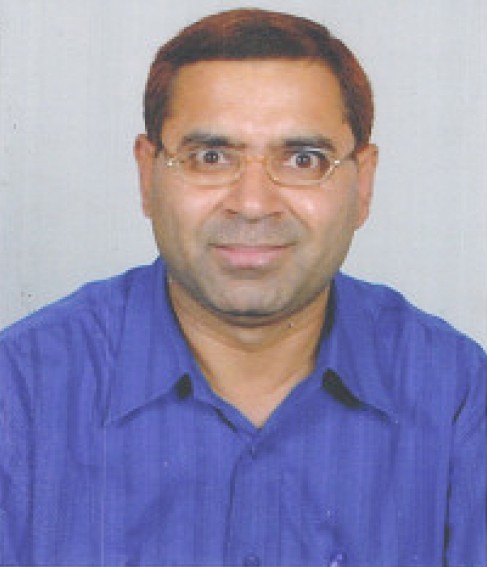
Sunil Nautiyal

Faculty


Home

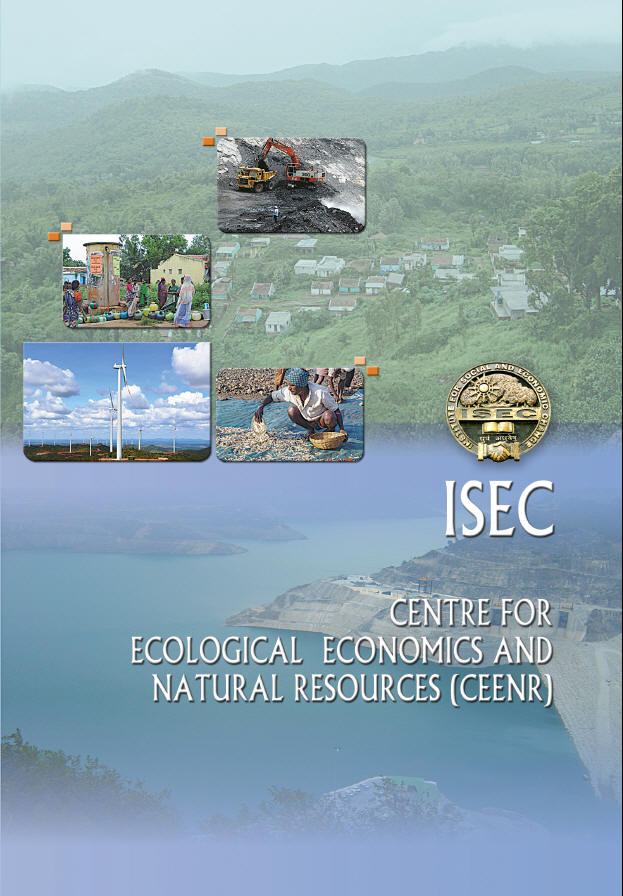
Associate Professor, Centre for Ecological Economics and Natural Resources (CEENR)


Area of Specialisation
  • Natural resource management and conservation;

  • Socio-economic and ecological approaches for sustainable development;

  • Production system analysis;

  • Land use land cover change analysis; Sustainable livelihood development; Ecological Modeling  

  • GIS and Remote Sensing in landscape analysis,

Academic Qualification

PhD (Botany)   H.N.B. Garhwal University, Srinagar – Garhwal 246 174, Uttarakhand India (Submitted: 15 June 1998; Awarded:  29 Nov 1999). Ph.D. work was carried out in G.B. Pant Institute of Himalayan Environment and Development, Garhwal Unit, Srinagar Garhwal (An Autonomous Institute of Ministry of Environment and Forests, Govt. of India).

PhD Thesis Title: Ecosystem function of buffer zone villages of Nanda Devi Biosphere Reserve, India

MSc (Botany)  H.N.B. Garhwal University, Srinagar – Garhwal 246 174, Uttarakhand India (1993).

Selected Publications (since 2001)

Books/Monographs

  • Ecological Economics: An Approach towards Socioeconomic and Environmental Sustainability (2010). Sunil Nautiyal and Bibhu P. Nayak (Eds), ISEC and NIE publication, July 2010; 383 pp.

  • Climate Change: Data Requirement and Availability (2009). Sunil Nautiyal and Bibhu P. Nayak (Eds), ISEC and MoSPI publication, April 2009; 188 pp.

  • Traditional agro-technologies of medicinal plants in Nanda Devi Biosphere Reserve - Second Edition (Nanda Devi Jaivmandal Arakshit Kshetra Mein Aushadhiya Padapon ki Paramparagat Krishi Takneek). G.B. Pant Institute of Himalayan Environment and Development, Kosi-Katarmal, Almora – 263 643, UA. India.

  • Suggestions for sustainable utilization and management of natural resources in Nanda Devi Biosphere Reserve- A World Heritage Site (Vishwa Dharohar Sthal (World Heritage Site) Nanda Devi Jaivmandal Arakshit Kshetra mein Prakritik Sansadhano ke Satat Upyog evam Prabandhan hetu Sujhao). G.B. Pant Institute of Himalayan Environment and Development, Kosi-Katarmal, Almora – 263 643, U.P. India

  • Improvement in fertility of barren land: research experiences from Uttaranchal Himalaya (Banjar Bhumi Ki Upjaau Kshmta mein Sudhar: Uttaranchal Himalaya mein Sodh ke Anubhav). G.B. Pant Institute of Himalayan Environment and Development, Kosi-Katarmal, Almora – 263 643, UA. India

Articles

  1. Nautiyal, S. Maikhuri, R.K., Rao, K.S. and Saxena, K.G. 2009. Ecosystem function of cold desert villages of the Indian Central Himalaya, India. Environmental Conservation for Sustainable Livelihoods in the Cold Desert Region of Asia (in press)

  2. Nautiyal, S. and Kaechele, H. (2009). Natural resource management in a protected area of Indian Himalaya: A modeling approach for anthropogenic interactions on ecosystems. Environmental Monitoring and Assessment, 153 (1-4): 253-271.

  3. Nautiyal, S., Kaechele, H., Rao, K.S. and Maikhuri, R.K. (2009). An economic evaluation of introduced crops cultivation in a part of the Indian Himalayan region. the Botanica, 57: 102-106.

  4. Nautiyal, S. and Kaechele, H. (2008). Fuel switching from wood to LPG can benefit the environment! Environmental Impact Assessment Review 28:523-532.

  5. Nautiyal, S. (2008). Natural resource management Research approach to understand the anthropogenic interactions on ecosystem: Testing the efficiency of conservation policies. Hima Paryavaran 20 (2): 9-10.

  6. Nautiyal, S., Bisht, V., Rao, K.S, Maikhuri, R.K. (2008). The role of cultural values in agrobiodiversity conservation: a case study from Uttarakhand, Himalaya. Journal of Human Ecology 23 (1):1-6.

  7. Nautiyal, S. and Kaechele, H. (2008). A modeling approach for natural resource management in nature protection areas in the Indian Himalayan region. Management of Environmental Quality-An International Journal. 19 (3):  335-352.

  8. Nautiyal, S. and Kaechele, H. (2007). Conserving the Himalayan forests: approaches and implications of different conservation regimes. Biodiversity and Conservation 16:3737-3754.

  9. Nautiyal, S., Kaechele, H., Rao, K.S., Maikhuri, R.K. and Saxena, K.G. (2007). Energy use and economic analysis of traditional Vs introduced crops cultivation in mountains of Indian Himalaya: A case study. Energy 32 (12): 2321-2335.

  10. Nautiyal, S. and Kaechele, H. (2007). Conservation of crop diversity for sustainable landscape development in the mountains of the Indian Himalayan region. Management of Environmental Quality 18 (5): 514-530.

  11. Nautiyal, S. and Kaechele, H.  (2007). Adverse impact of pasture abandonment in Himalayas of India: Testing efficiency of a natural resource management plan (NRMP). Environmental Impact Assessment Review 27: 109-125.

  12. Rao, K.S., Nautiyal, S., Maikhuri, R.K. and Saxena, K.G. (2005). Resource Flows of Villages with Contrasting Lifestyles in Nanda Devi Biosphere Reserve, Central Himalaya, India. Journal of Mountain Science 2(4),271-293. 

  13. Nautiyal, S., Rajan, K.S. and Shibasaki, R. (2005). Interaction of biodiversity and economic welfare-a case study from Himalayas of India. Journal of Environmental Informatics 6 (2), 111-119.

  14. Nautiyal, S., Shibasaki, R., Rajan, K.S. and Maikhuri, R.K. and Rao, K. S. (2005): Impact of land use changes on subsidiary occupation: a case study from Himalayas of India. Environmental Informatics Archives 3,14-23. 

  15. Semwal, R.L., Nautiyal, S., Sen, K.K., Rana, U., Maikhuri, R.K., Rao, K.S. Saxena, K.G. (2004): Patterns and ecological implications of agricultural land-use changes: a case study from central Himalaya, India.  Agriculture, Ecosystems and Environment 102, 81?92.

  16. Nautiyal, S. Rao, K.S., Maikhuri, R.K. and Saxena, K.G (2003): Transhumant Pastoralism and Sustainable Development : A case study in the Buffer Zone of the Nanda Devi Biosphere Reserve, India. Mountain Research and Development. 23 , 255-262.

  17. Nautiyal, S. Maikhuri, R.K., Rao, K.S. and Saxena, K.G. (2003): Ethnobotany of the Bhotiya tribe of the buffer zone villages of Nanda Devi Biosphere Reserve. Journal of Economic and Taxonomic Botany 23, 119-141.

  18. Nautiyal, S. Maikhuri, R.K., Rao, K.S., Semwal, R.L. and Saxena, K.G. (2003): Agroecosystem function around a Himalayan Biosphere Reserve. Journal of Environmental Systems 29, 71-100.

  19. Rao, K.S., Nautiyal. S., Maikhuri, R.K.  and Saxena, K.G (2003): Local Peoples' Knowledge, Attitude and perceptions of planning and management issues in Nanda Devi Biosphere Reserve. Environmental Management.31, 168-181.

  20. Negi, C. S. and Nautiyal, S (2003): Indigenous Peoples, Biological Diversity and Protected Area Management- Policy Framework Towards Resolving Conflicts. International Journal of Sustainable Development and World Ecology 10, 169-180.

  21. Nautiyal, S., Rao, K.S., Maikhuri, R.K., Negi, K.S. and Kala, C.P. (2002): Status of Medicinal and aromatic plants on way to Vashuki Tal in Mandakini Valley Garhwal Himalaya, Uttaranchal. Journal of Non-Timber Forest Products 9, 124-131.

  22. Maikhuri, R.K., Nautiyal, S., Rao, K.S., and Saxena, K.G. (2001): Conservation policy and people conflicts: a case study from Nanda Devi Biosphere Reserve (a World Heritage Site), India. Forest policy and economics 2, 355-365.

  23. Nautiyal, S. Maikhuri, R.K., Rao, K.S. and Saxena, K.G. (2001): Medicinal Plant Resources in Nanda Devi Biosphere Reserve in the Central Himalaya. Journal of Herbs, spices and Medicinal Plants 8 ,  47-64.

  24. Nautiyal, S., Rao, K.S., Maikhuri, R.K., Semwal, R.L. and  Saxena, K.G (2001): Traditional knowledge related to medicinal and aromatic plants in tribal societies in a part of Himalaya. Journal of medicinal and aromatic plant Sciences 22-23, 528-541. 

Working Papers
  • Nautiyal, S. (2008): Structure of Central Himalayan forests under different management regimes: An empirical study. Working paper No 206. Institute for Social and Economic Change, Bangalore.

  • Nautiyal, S. (2009): Spatio-temporal analysis of forests under different management regimes using Landsat and IRS images. Working paper no. 213. Institute for Social and Economic Change, Bangalore.

Articles in Conferences, Books/Proceedings
  • Impact of Land use Change: Socio-economic and Ecological Perspectives. In: Nautiyal, S., Nayak. B.P. (Editors). Ecological Economics: Ecological Economics: An Approach towards Socioeconomic and Environmental Sustainability, ISEC-NIE Publication, 2010. p. 239-247.

  • Research approach to understand the climate change impact at micro level: A case study. In: Nautiyal, S., Nayak, B.P. (Editors). Climate Change: Data Requirement and Availability, ISEC-CSO, MoSPI publication, 2009. p. 150-161.

  • Is grazing good or bad for pasture ecosystem in the Himalayas of India? Testing the efficiency of conservation model using LANDSAT and IRS images. In: 33rd International Symposium on Remote Sensing of Environment “Sustaining the Millennium Development Goals” Stresa, Italy.

  • Ecosystem function of cold desert villages of Indian Central Himalaya, International Conference on Environmental Conservation for Sustainable Livelihoods in the Cold Desert Region of Asia, Solan, HP. 2008

  • Human and ecosystems interaction and its ecological impacts in Mountains: Lesson from land use development in nature conservation areas in the Himalayas, India Transatlantic Land Use Conference, Washington DC, USA (2007).

  • Using remote sensing and ground truth data to study and analyse the structure and developmental pattern of the forests under different management regimes in the Himalayas of India. CD-ROM publication (pp 1-4). 32nd International Symposium on Remote Sensing of Environment, San Jose, Costa Rica (2007).

  • Traditional crop diversity needs institutional and policy support for their conservation and sustainable land use development in Himalayas of India. In: Berlin Conference on Human Dimensions of Global Environmental Change: Resource Policies: Effectiveness, Efficiency, and Equity (2006).  

  • Priority interventions for sustainable development of buffer zone villages of NDBR. . In: Resource appraisal, Technology application and environmental challenges in Central Himalaya, Eds., Rawat, M.S.S., Lakhera, L.P., Pal, A., Negi, Y.S. and Bisht, K.S. (Department of Geography, HNB Garhwal University Srinagar, Garhwal, Uttaranchal). 84-95 (2006).

  • Land use Intensification and its Ecological Impacts, in Himalayas of India – Lessons for scenario development in mountainous regions. Proceedings of 31st International Symposium on Remote Sensing of Environment (31st ISRSE), Saint Petersburg, Russia (04 pages), CD-ROM Publication (2005).

  • Cultivation and conservation of higher Himalayan medicinal plants through participatory and action research: A case study from the Central Himalaya (Uttaranchal), India. In: Thomas, Y., Karki, M., Gurung, K. & Parajuli, D. (Eds.) Himalayan Medicinal and Aromatic Plants, Balancing Use and Conservation (Proceedings of the Regional Workshop on Wise Practices and Experiential Learning in Conservation and Management of Himalayan Medicinal Plants, December 15-10, 2002, Kathmandu, Nepal), WWF/IDRC, Canada. Pp. 281-301 (2005).

  • Environmental Conservation versus Compensation: Explorations from the Uttaranchal Himalaya. ‘International Society for Environmental Information Sciences, Canada 2: 88-99 (2004).

  • Ethnobotany to Tolchha Sect of Bhotiya Community of Garhwal Himalaya. In: Series Recent Progress in Medicinal Plants, Vol. 1-Ethnomedicine & Pharmacognosy, Eds, Singh, V.K.,  Govil, J.N. and Singh, G. (SCI TECH Pub USA),  9-32 (2002). 

  • Traditional Natural Resource Management in Central Himalaya and its Relevance to Biosphere Management. In: Traditional Ecological Knowledge for Managing Biosphere Reserves in South and Central Asia, Eds, Ramakrishnan, P.S., Rai, R.K., Katwal, R.P.S. and Mehndiratta, S. (Oxford & IBH Publication, India (P) Ltd., New Delhi), 71-96 (2002).

  • Land use land cover change impacts and strategies for rehabilitation of degraded land: A case study from the Central (lesser) Himalaya (Uttaranchal). In: Rawat, M.S.S. (ed.). Central Himalaya: Environment and Development: Potential, Actions and Challenges. Transmedia Publication, Srinagar, Garhwal. pp. 230-240 (2003).

  •  Medicinal plant cultivation in Nanda Devi Biosphere Reserve Buffer Zone villages. In: Singh, V.K., Govil, J.N. & Singh, Gurdip (Eds.) Recent Progress in Medicinal Plants. Vol. I. Ethnomedicine and Pharmocognosy. Sci Tech Publishing Llc, Houston, USA. pp. 345-362 (2002).

  • Traditional Natural Resource Management in Central Himalaya and its Relevance to Biosphere Management. In: Traditional Ecological Knowledge for Managing Biosphere Reserves in South and Central Asia, Eds, Ramakrishnan, P.S., Rai, R.K., Katwal, R.P.S. and Mehndiratta, S. (Oxford & IBH Publication, India (P) Ltd., New Delhi), 71-96 (2002).

  • Medicinal  plant cultivation  practices of Bhotiyas in Nanda  Devi  Biosphere Reserve villages of Garhwal Himalaya. In: Himalayan Medicinal Plants: Potential and Prospects, HIMAVIKAS Occasional Publication No. 14, Eds, Samant, S.S., Dhar, U. and Palni, L.M.S. (Gyanodaya Prakashan Pub., Nainital), 317-328 (2002). 

  • Agroecosystem Management of Nanda Devi Biosphere Reserve. In: Proceedings of Biosphere Reserve in India and Their Management, Eds, Sharma, J.K., Easa, P.S., Mohanan,C., Sasidharan ,N. & Rai , R.K. 122-126 (2002).

  • Indigenous ecological knowledge, biodiversity and sustainable development in the central Himalayas. In: Depommier, D. & Ramakrishnan, P.S. (eds.) Proceedings of the Indo-French colloquium on Traditional Ecological Knowledge, Conservation of Biodiversity and Sustainable Development. Publication of the Department of Ecology, IFP, Pondichery. pp. 100-140 (2002).

Popular articles published in English/ Hindi (English translation of Hindi titles are in italics)

  • Ek vaigyanik vivechna - Madhya Himalaya ke vibhinn van tantron ke sanrakshan, sanvardhan evam prabhav ki (A scientific review on conservation, development and impact of different forest ecosystems of the Central Himalaya), ENVIS (in press).

  • Madhya Himalaya ke Paramparik Krishi Tantra main Adhunik Faslon ko Krishikaran: Ek adhayyan. (Cultivation of modern crops in traditional Himalayan agroecosystem: a case study) ENVIS bulletin (Himalayan Ecology and Development). 14(2): 85-87 (2006).

  • Paramparik Sanskritik mulyon ka paryavaran sanrakshan mein yogdan (Role of traditional socio-cultural values in environmental conservation) ENVIS bulletin (Himalayan Ecology and Development). 13(1): 97-100 (2005).

  • Jari-butiyon ka Utpadan: Karyashalayein krishikaran ke protsahan hetu vyawaharik vikalp. (Cultivation of medicinal plants: the workshops are realistic approaches for promotion of agro-techniques in rural areas) Hima-Paryavaran Newsletter 14 (1&2), 15 (1): 27-30 (2003).

  • Kyon udashin hain Vishwa Dharohar Sthal Nanda Devi Jaiv Mandal Arakshit Kshetra (World Heritage NDBR) ke Niwashi (Why inhabitants of Nanda Devi Biosphere Reserve (world heritage site) are neutral about conservation programs?) ENVIS bulletin  (Himalayan Ecology and Development) 10(1): 75-76 (2002).

  • Uttaranchal mein videshi sugandhit Van Hajiri : Abhishap ya Vardan? (The exotic scented Van Hajiri (TAGETUS MINUTA) in Uttaranchal: curse or boon?) ENVIS bulletin (Himalayan Ecology and Development) 10(1): 75-78 (2002).

  • Aitihaasik NANDA RAJ JAT-Prakriti evam sanskriti ka parasparik sambandh: Vigat and vertman Swarup. (Historical NANDA RAJ JAT- the reciprocal relation of culture and nature: past and present scenario) ENVIS bulletin  (Himalayan Ecology and Development) 9(2):75-91 (2001).

  • Ethnobotanical notes on the exploration of germplasm in OM Parvat and Adi - Kailash Mountains in Uttaranchal. Hima-Paryavaran Newsletter. 14 (1&2), 15 (1): 8-10 (2001).

  • Mandakini Valley: Religious, Cultural and Botanical aspects. Hima-Paryavaran Newsletter 14 (1&2), 15 (1): 14-16 (2001).

Seminar/Symposia/Training Courses organized/coordinated

  • Coordinated National Seminar on “Ecological Economics: An Approach towards Socioeconomic and Environmental Sustainability” & Prof. R. Misra Birth Centenary Lecture, 30 September - 1 October 2009.

  • Coordinated National Seminar on “Climate change and its impact at micro level: Data requirement and availability”, 16-17 April 2009.

Professional Recognitions, Awards, Fellowships Received
  • Selected as Biographee for MARQUIS Who's Who in Science and Engineering, 2008.

  • Nominated for one of the best researchers of the year 2007 at Leibniz-Centre for Agricultural Landscape Research (ZALF), Eberswalder Str. 84, Muencheberg, 15374, Germany for research publications (Value of the award was Euro 2250/-).

  • Received Humboldt Fellowship from the Alexander von Humboldt Foundation, Germany to work at Leibniz-Centre for Agricultural Landscape Research (ZALF), Institute of Socio-Economics, Muencheberg, Germany in 2006 for 2 years.

  • Received Japan Society for the Promotion of Science (JSPS) Fellowship to do Post doc research at Center for Spatial Information Science, The University of Tokyo, Japan in 2003 for 2 years.

  • Member:  Advisory/ Editorial/ Reviewer Board of many peer reviewed international journals. 

Membership
  • Delhi University Botanical Society (Life)

  • National Institute of Ecology, New Delhi (Life)

  • International Society for Environmental Information Sciences, Canada

  • Theme on Governance, Equity, and Rights –TGER/IUCN/CEESP

  • Society for conservation and resource development of medicinal plants, New Delhi

  • The South Asian Network for Development and Environmental Economics (SANDEE)

Professional Association

  • Member Research Advisory Committee of Indian Plywood Industries Research and Training Institute (IPIRTI), Autonomous Body of Ministry of Environment and Forests, Govt. of India. Bangalore 

  • Member Expert Committee for creation of database on climate change of the Ministry of Statistics and Programme Implementation, Govt. of India, 

  • Member Doctoral Committee,  VIT UNIVERSITY, Vellore, Tamil Nadu, India

Research Projects ongoing

  • Baseline Study of Flora Fauna at proposed uranium mining site at Gogi, Gulbarga district, Karnataka

  • Climate change and its impact at micro level

  • Urban Influence on Rural and Peri-urban Landscapes: Socioeconomic and Ecological Perspective

  •  Health and Livelihoods of Community and Traditional Medicinal Plants: SWOT of Two Agroclimatic Zones of India

  •  Forest Resources and Economic Growth: An Enquiry into the Growth Linkages of Forest Cover in Indian States

Dr. Sunil Nautiyal
Associate Professor, CEENR
Institute for Social and Economic Change
Nagarabhavi P.O. BANGALORE-560072, India
Tel : Office 080-23215468, 23215519 Ext.-246
Fax : 080-23217008
e-mail: sunil@isec.ac.in


symbols.gif (368 bytes)

wb00771_.gif (436 bytes)

 
ISEC

  [The Institute] [Current Research] [Ph. D Programme] [Seminars and Training]

  [Academic Departments/Units] [Library & Documentation] [Information Technology]

[Publications] [Faculty] [Vision 2020]  [Home]